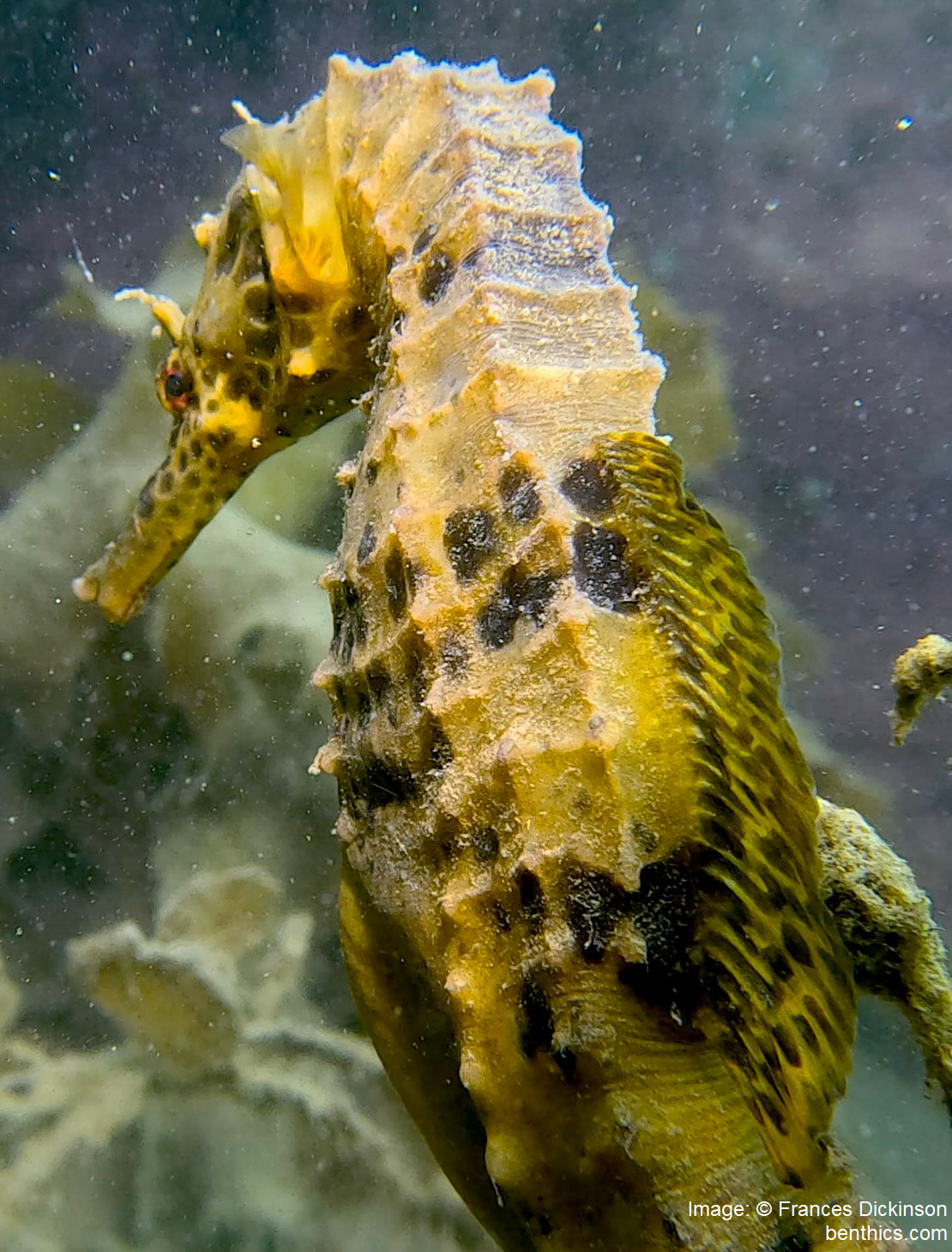
The Kelly Tarlton’s Marine Wildlife Trust has launched an exciting new conservation programme focused on the pot-bellied seahorse (Hippocampus abdominalis) in Tāmaki Makaurau Auckland. Also known as manaia, this remarkable species is Aotearoa New Zealand’s only native seahorse and the largest seahorse species in the world, capable of growing up to 35 cm in length. Found in sheltered coastal environments such as bays and estuaries, manaia are typically associated with structured habitats including macroalgal forests, wharves, and mooring lines.
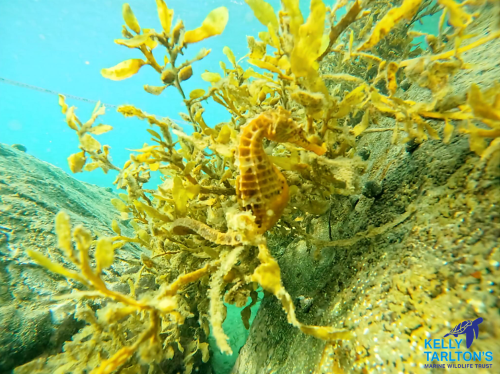
Despite their iconic status, very little is known about the current population of manaia in the Auckland region. Over the past two decades, anecdotal observations suggest that seahorses may be declining, with some local populations potentially disappearing altogether. However, these observations have not been formally assessed, meaning there is currently a critical gap in our understanding of this species’ status and the health of its habitat.
To address this, the Trust has developed the Auckland Tāmaki Makaurau Seahorse Survey, a collaborative project that combines scientific research, community engagement, and mātauranga Māori. The project has three key components:
-
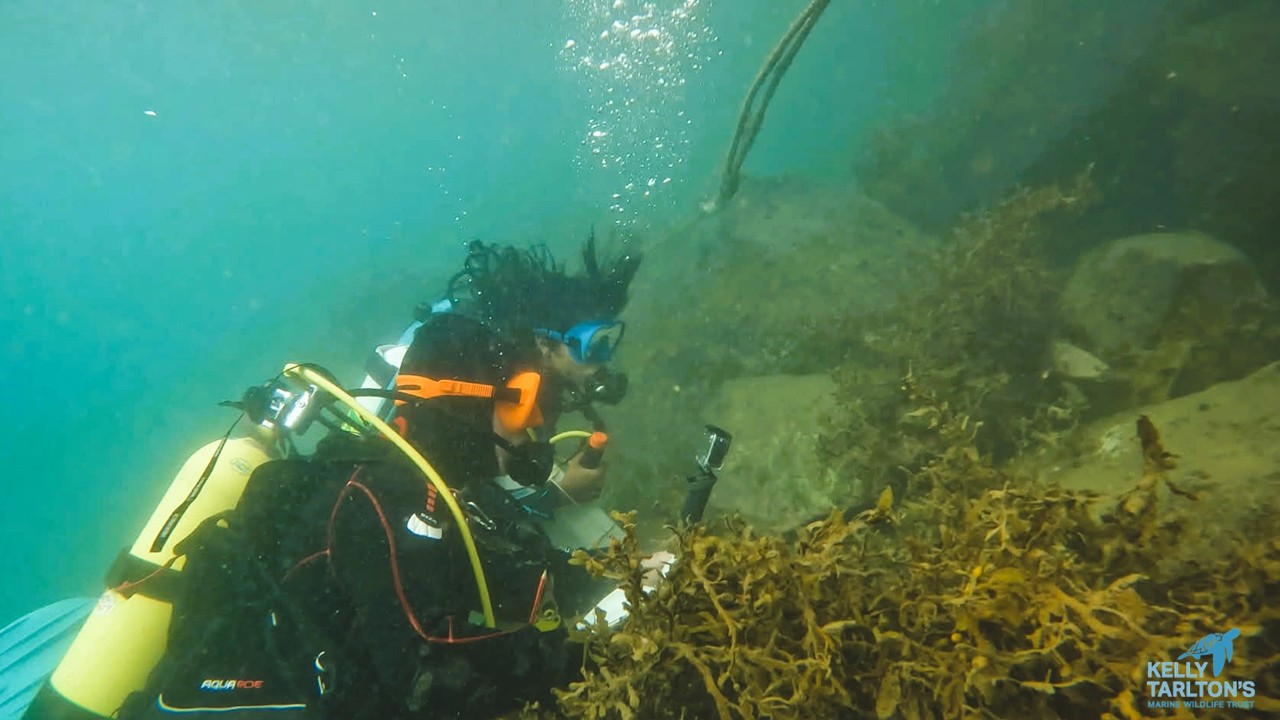
First, trained scientific divers are undertaking monthly underwater surveys at key sites in the region. These surveys replicate baseline studies conducted 25 years ago, allowing us to directly compare present-day seahorse abundance, distribution, and population structure with historical data.
-
Second, the project is calling on the wider community to get involved. Through a regionwide citizen science initiative, water users including snorkellers, divers, fishers, and beachgoers are encouraged to report sightings of seahorses and related species to our project on iNaturalist (https://www.inaturalist.org/projects/tamaki-makaurau-auckland-seahorse-survey). These observations will help build a broader picture of where manaia occur across Tāmaki Makaurau, while also connecting people with marine conservation in a meaningful and accessible way.
-
Finally, the project is exploring innovative ways to support seahorse habitat. In partnership with mana whenua, the Trust is investigating the use of artificial habitat structures (‘seahorse hotels’) designed using environmentally friendly materials and informed by mātauranga Māori. These structures aim to supplement natural habitat, particularly in areas where macroalgal forests (a key habitat for seahorses) are in decline.
As a taonga species, manaia hold cultural significance for many iwi, often representing a guardian or kaitiaki. This project seeks not only to better understand and protect seahorse populations, but also to strengthen partnerships with mana whenua and support their role as kaitiaki of the moana.
By combining science, community action, and indigenous knowledge, the Auckland Tāmaki Makaurau Seahorse Survey will generate much-needed data to inform conservation management while inspiring greater stewardship of our coastal ecosystems. Through this work, the Trust hopes to contribute to the conservation of manaia and the wider marine ecosystem as a whole.
The Kelly Tarlton’s Marine Wildlife Trust gratefully acknowledges the $4,000 the Hauraki Gulf Conservation Trust has donated to enable this project to get underway.